
Wizanator Review: Reliability & Real Results
That moment when the email lands—your pre-employment drug test is scheduled for next week—creates a specific kind of gravity. It’s a weight that pulls every other concern into its orbit. For the daily cannabis user, the search for a solution begins immediately, and one term that surfaces with curious frequency is the “wizanator.”
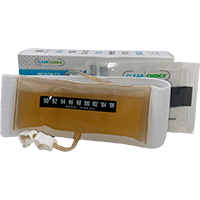
- All you need to pass your test in one kit.
- It will pass specimen validity tests.
- Labs cannot tell that it’s synthetic.
- Invisible under clothes.
- Maintains perfect temperature.
- All you need to pass your test in one kit.
- It will pass specimen validity tests.
- Labs cannot tell that it’s synthetic.
- Invisible under clothes.
- Maintains perfect temperature.
To be fair, the appeal is logical. It promises to bypass the body’s natural elimination process entirely. But before we evaluate any device, we must ground ourselves in the non-negotiable physics of the situation: the first principles of urine drug testing.
Here is the truth. A lab doesn’t just test for drugs. It validates the sample itself. The process is built on a few immutable rules. The sample must be warm—between 90°F and 100°F. It must contain specific chemical markers like creatinine and urea. Its pH and specific gravity must fall within a human range. Any deviation flags the sample as “substituted,” triggering immediate observation or failure.
The Whizzinator, in its various forms—from the original Whizzinator to the Whizzinator 5000 and the Whizz Kit—is a prosthetic delivery system designed to introduce a synthetic alternative. It’s an attempt to orchestrate a complex deception. But the critical question isn’t about the device’s realism. It’s whether the synthetic urine inside can withstand the lab’s specimen validity testing, the universal solvent that dissolves most gimmicks.
So, we’ll examine the Whizzinator device against these foundational rules. The analysis isn’t about marketing claims; it’s about operationalizing success in a system designed to detect failure.
The Science of Urine Drug Testing: What Labs Actually Measure
The lab’s analysis is not a casual inspection. It is a multi-layered verification process governed by strict, non-negotiable rules. Before a technician even looks for drug metabolites, they perform Specimen Validity Testing (SVT). Think of SVT as the foundational physics of the testing universe. Any solution you use must obey these laws, or it is immediately disqualified.
First, there is the matter of temperature. The sample must be between 90°F and 100°F within four minutes of collection. This isn’t a suggestion; it’s a primary filter. A sample outside this narrow band signals one of two things to the lab: it was stored, or it was artificially heated. Both lead to an automatic failure and, often, a retest under direct observation.
Then, the lab measures the chemical signature of human urine. They check for creatinine, a waste product your muscles produce. A natural level sits between 20 and 300 mg/dL. A reading below 2 mg/dL doesn’t just raise a flag—it declares the sample “substituted.” They also measure specific gravity, the density of the liquid. Normal human urine has a specific gravity between 1.003 and 1.030. Synthetic formulas often miss this mark, creating an unnatural uniformity that modern equipment detects.
The pH level, the acidity or alkalinity of the sample, is another checkpoint. Human urine falls between 4.5 and 9.0. A synthetic sample lacking proper buffering agents can drift outside this physiological range, especially after storage, triggering an “invalid” result.
Here is the truth. The scrutiny doesn’t stop there. Advanced labs now test for the absence of endogenous biomarkers—substances like uric acid, normetanephrine, and urobilin that are naturally present in human urine but absent from even the most sophisticated synthetic formulas. These tests are designed with one purpose: to answer the question, can synthetic urine be detected? The answer, with today’s technology, is increasingly yes. The lab’s entire protocol is a gauntlet of verification, a system built to expose any deviation from the biological norm.
Given these strict, multi-variable detection rules, how does a product like the Whizzinator claim to navigate them?
- All you need to pass your test in one kit.
- It will pass specimen validity tests.
- Labs cannot tell that it’s synthetic.
- Invisible under clothes.
- Maintains perfect temperature.
- All you need to pass your test in one kit.
- It will pass specimen validity tests.
- Labs cannot tell that it’s synthetic.
- Invisible under clothes.
- Maintains perfect temperature.
Self-Diagnosis: Is Your Testing Scenario High-Risk?
Given the lab’s sophisticated detection gauntlet we just outlined, the next logical step isn’t to panic—it’s to diagnose. The viability of any strategy, including a device like the Whizzinator, is not a universal constant. It is a variable entirely dependent on the gravity of your specific situation. What works in one scenario can be a catastrophic liability in another.
To operationalize this, you need to conduct a clear-eyed risk assessment. Ask yourself these four diagnostic questions. Your answers will define your operational landscape and dictate whether a complex device is a tool or a trap.
Question 1: What is the Supervision Level?
This is the primary filter. The entire architecture of your plan hinges on this single variable.
- Unsupervised: You will be alone in a restroom, typically with the door closed or slightly ajar. There is no direct visual monitoring. This is the only scenario where a prosthetic device has a theoretical chance of being used without immediate detection.
- Directly Observed: A same-gender observer will watch the urine stream leave your body. In many high-stakes scenarios, you will also be required to raise your shirt, lower your underwear to mid-thigh, and turn 360 degrees. Any device, strap, or tubing will be discovered during this check. Its use is not just risky; it is an automatic “refusal to test,” with consequences often mirroring a failed test.
The friction here is absolute. If your test is supervised, the device is not a solution—it is the evidence.
Question 2: What Are the Stakes?
Not all tests carry the same weight. The consequences of failure scale with the context.
- Standard Pre-Employment Screen: Often unsupervised, conducted at a clinic. The primary consequence is losing a job opportunity.
- High-Stakes Legal/DOT/Court-Ordered Test: Governed by strict federal or legal protocols (like 49 CFR Part 40). These frequently mandate direct observation, especially for return-to-duty or follow-up tests. The consequence here isn’t just a lost job; it can be a probation violation, a lost commercial license, or a felony charge for specimen tampering. The risk profile is exponentially higher.
It stands to reason, then, that the higher the stakes, the more scrutiny you will face, and the more a simple, discreet method becomes a strategic imperative over a complex gadget.
Question 3: What is the Expected Wait Time?
The test doesn’t start when you enter the restroom; it starts when you arrive at the facility. Unpredictable wait times are a major source of operational failure.
- Short Wait (Under 30 minutes): Manageable for most temperature maintenance methods.
- Extended Wait (1-3 hours): Common due to “shy bladder” protocols, where you may be required to drink up to 40 ounces of fluid and wait on-site. Maintaining a precise temperature range (90-100°F) for this duration is a significant challenge for any external heat source, like a hand warmer. The longer the sample must be kept “oven-ready,” the greater the chance of a temperature failure—a failure that often triggers an immediate, directly observed re-test.
Question 4: What Are the Facility’s Procedures?
The small details of the collection site create your final set of hurdles.
- Pat-Downs and Pocket Checks: Many collection sites require you to empty pockets and remove outer garments. A bulky device or bottle becomes a glaring liability during this preparation phase.
- Quiet, Controlled Environments: Clinic restrooms are often silent. The click of a bottle cap or the slosh of liquid can seem deafening, creating psychological pressure that leads to mistakes.
- Specimen Validity Testing (SVT): As discussed, modern labs don’t just test for drugs; they test the urine itself. They check pH, specific gravity, and creatinine. They screen for biocides and other chemical markers. Your solution must pass this chemical audit, not just the visual and temperature one.
The So What?
Your answers to these questions sketch your personal risk profile. If you face a supervised, high-stakes test with a long wait and strict procedures, the complexity and detection risks of a device like the Whizzinator transform it from a potential asset into your greatest vulnerability. The system is designed to spot anomalies, and a prosthetic is a profound anomaly.
This diagnosis often leads to a clearer conclusion: for high-risk scenarios, the goal shifts from simulating a perfect act to providing a perfect, simple sample with minimal moving parts. It’s a shift from mechanical complexity to strategic simplicity. For those navigating this gauntlet, exploring broader strategies on how to pass a drug test for weed becomes less about a single device and more about matching a reliable, low-friction method to the specific constraints you’ve just identified.
Inside the Whizzinator Kit: Components, Features, and Intended Use
Let’s dissect the kit itself. On paper, the Whizzinator is an engineered solution to a series of very human fears. It’s not just a bottle of fake pee; it’s a system designed to orchestrate the entire performance of urination under scrutiny.
Here is the truth of what’s in the box and what it promises to do.
The Core Hardware: A Prosthetic Performance
The standard kit, whether the flagship Whizzinator Touch or the unisex Whizz Kit for women, is built around a few key pieces of hardware. The intent is to provide a discreet, body-worn apparatus that delivers a pre-mixed sample with convincing realism.
- The Delivery System: For men, this centers on the fake penis attachment, available in five skin tones from white to black. Its sole purpose is to pass a direct visual inspection. The female-oriented Cupid kit or Whizz Kit replaces this with a belt and clamped hose system, acknowledging a different anatomical and supervisory landscape.
- The Reservoir & Flow Control: A medical-grade vinyl bladder bag holds the synthetic urine. It connects via a tube with a valve or clip, designed for a start/stop flow that mimics natural urination. This is the mechanical heart of the operation.
- The Support Structure: An elastic belt with leg straps secures the reservoir against the body. This addresses the pain point of discretion and movement, aiming to prevent shifting or suspicious bulges during a pat-down.
- The Temperature Management: This is arguably the most critical subsystem. It relies on heating pads and a temperature strip. The air-activated pads are meant to bring the sample to the 94-100°F window and hold it for hours. The strip on the bag provides visual confirmation—a “green” go signal.
The Chemistry & Instructions
The kit includes a vial of dehydrated synthetic urine. The synthetic urine kit instructions are straightforward: mix the powder with distilled water using the provided syringe, then inject it into the bag’s refill port. The mixture must be used within 24 hours, creating a narrow window of operational readiness.
The Intended Use Case: Solving for Supervision
Every component maps to a specific anxiety. The prosthetic is for supervised tests. The belt is for hiding the apparatus. The heater is for the temperature check. The synthetic formula is for passing the initial lab validity tests for pH and specific gravity. It’s a comprehensive attempt to address the full spectrum of test-day vulnerabilities.
To be fair, the design shows a clear understanding of the user’s predicament. It attempts to replace anxiety with a scripted, mechanical process.
But here’s the pivot. The entire system’s reliability hinges on flawless execution in a high-stress, unpredictable environment. Its complexity is its potential point of failure. The real test isn’t in the kit’s features, but in the friction of the real world—a friction that leads us to question whether such an elaborate device is always the right tool for the job.
Practical Reliability: Does the Whizzinator Work in Real Test Scenarios?
So, we operationalize the theory. The kit is assembled. Now, we navigate the actual terrain of the test. The central question becomes brutally simple: does the Whizzinator work for drug tests in the chaotic, high-friction reality of a clinic or probation office?
The answer isn’t binary. It’s a function of your environment. Let’s dissect the two primary scenarios.
The Supervised Test: A Structural Mismatch
This is where the device’s architecture collides with protocol. For probation, military, or DOT-mandated tests, supervision isn’t a suggestion—it’s a rigid, observational procedure. Collectors are trained to look for exactly what the Whizzinator is. Whizzinator reviews for probation often hinge on this single, fatal point. The process requires you to raise your clothing and lower undergarments. A 360-degree turn is standard. The observer’s mandate is to watch the urine stream leave your body and enter the cup. A prosthetic device, a tube, a valve—these are not subtle. They are visual red flags that trigger an immediate “refusal to test,” a outcome often as damaging as a positive result. The real world pee test performance here is poor, not because of the synthetic urine, but because the tool itself is detectable. It fails the most basic requirement: discretion under direct scrutiny.
The Unsupervised Test: An Exercise in Overkill
Now, pivot to the standard pre-employment screen. No one is watching. The door is closed. Here, the Whizzinator’s value proposition inverts. It becomes a complex solution to a simple problem. The elaborate strapping, the prosthetic, the mechanical valve—these introduce unnecessary points of failure. You’re managing a system when all you need is a delivery mechanism. Simpler, flatter bottles are easier to conceal in a pocket or waistband, present less bulk under fitted clothing, and have fewer moving parts that can leak, click, or malfunction under stress. The device’s complexity, designed for a level of realism you don’t need, becomes its own liability. It’s the tactical equivalent of bringing a engineered apparatus to a task that requires a simple, reliable vessel.
The friction of the real world exposes this dichotomy. The Whizzinator is often too detectable for the scenarios where you need maximum stealth, and too cumbersome for the scenarios where you need simple reliability. This operational mismatch points to a deeper question about hidden vulnerabilities—the kind that live in the gaps between a product’s design and the unpredictable pressures of test day.
The Hidden Risks: Detection, Supervision, and User Anxiety
Here is the truth: the operational mismatch we just outlined isn’t a theoretical flaw. It manifests as a series of very real, very high-stakes vulnerabilities on test day. These aren’t user errors; they are systemic failures baked into the device’s design when placed against the gravity of modern testing protocols.
The Temperature Trap
The first and most immediate point of failure is thermodynamics. A lab’s acceptance window is narrow—90°F to 100°F—and they check it within four minutes of your submission. The Whizzinator’s heating element is notoriously slow, potentially taking an hour to reach that range. This forces a risky pre-heating ritual, often with a microwave, which introduces the opposite problem: overshoot the mark, and the sample is instantly rejected for suspected artificial heating.
Even if you nail the initial temperature, the physics are against you. Synthetic urine loses heat rapidly once disconnected from its source. A 30-minute wait in a clinic lobby—a common friction point—can drop your carefully calibrated sample below the readable range of the strip, leaving you with a blank reading and a failed test. You’re not just fighting the clock; you’re fighting entropy.
The Supervision Paradox
This is where the device’s core concept collapses under scrutiny. If your test is unsupervised, the elaborate prosthetic and plumbing are overkill—a complex solution to a simple problem. But if the test is supervised, as is standard for probation, DOT, or many federal jobs, the device becomes a catastrophic liability.
Collection protocols are designed to detect exactly this. You will likely be asked to empty pockets, remove outer garments, and may even undergo a direct observation procedure where you raise your shirt and lower your pants. The bulk of the Whizzinator’s pouch, belt, and straps is difficult to conceal under anything but the baggiest clothing. The mechanical pinch valve can emit an unnatural clicking sound. The prosthetic itself may lack the natural scent or foaming action of real urine, triggering a collector’s suspicion. In this scenario, detection isn’t a risk; it’s a near-certainty. And being caught translates legally to a “refusal to test,” which carries the same weight as a positive result.
The Anxiety Amplifier
To be fair, the device doesn’t just create technical risks; it manufactures psychological ones. The sheer stress of smuggling and operating the apparatus creates behavioral tells—fidgeting, avoiding eye contact, lingering too long in the restroom. These are precisely the cues that alert a technician to initiate heightened scrutiny. You’re not just hiding a device; you’re hiding your anxiety about hiding the device, a recursive loop that increases your odds of getting caught.
The ‘so what’ is stark. The legal and career consequences are not abstract. In at least 18 states, using synthetic urine to defraud a test is a criminal offense, ranging from misdemeanors to felonies. For a commercial driver, a detected device means a report to the FMCSA Clearinghouse, derailing your career. For someone on probation, it means an immediate violation hearing and likely incarceration.
It stands to reason, then, that a tool introducing this magnitude of detectable friction—thermal, physical, and psychological—is fundamentally misaligned with the goal of a seamless, negative test result. The search for reliability leads us away from complexity and toward a principle of elegant simplicity.
Shelf Life, Storage, and Practical Maintenance
Shelf life, storage, and maintenance—these are the logistical undercurrents that determine whether a solution will hold its value or become a liability. It’s one thing to own a tool; it’s another to trust it after it has sat in a drawer for six months.
Here is the truth: reliability is not a static feature. It degrades.
The Shelf Life Equation
Synthetic urine exists in two primary states, each with a distinct expiration clock.
- Powdered concentrates (like those used with the Whizzinator) boast a longer, sometimes indefinite, sealed shelf life. The chemistry is stable until you introduce water. The moment you mix it, however, you initiate a biological countdown. That rehydrated solution must be used within approximately 24 hours before microbial growth or chemical breakdown renders it useless.
- Pre-mixed liquid solutions (the hallmark of the Incognito Belt and similar systems) operate on a different timeline. Unopened, they typically maintain integrity for one to two years. Once opened, the window narrows dramatically—refrigerated, you might have 48 hours; frozen, up to six months.
The operational risk is clear. Stockpiling a mixed Whizzinator kit for a surprise test is a gamble against time. An Incognito Belt stored in a cool, dark place remains a stable asset, but even that asset has a valuation date printed on the bottle.
The Weakest Link: Heating Elements
The most common point of failure isn’t the urine itself—it’s the mechanism designed to bring it to body temperature. Air-activated heating pads are single-use chemical reactions. Their reliability plummets with age. A pad stored for a year may fail to activate, activate sluggishly, or—worse—overheat the sample beyond the 100°F threshold, flagging it immediately.
This creates a profound logistical anxiety. You’re not just storing a bottle; you’re banking on a chemical battery that you cannot test beforehand. The uncertainty of whether your emergency kit will actually perform under pressure is a friction all its own.
The Maintenance Burden
For a reusable device like the Whizzinator, ownership comes with a cleaning protocol that is itself a liability. It requires meticulous flushing with specific solutions (never soap) and thorough air-drying to prevent microbial growth in the tubing and prosthetic. Any residue or moisture left behind compromises the next use. This isn’t a “set and forget” tool; it’s a piece of equipment demanding ongoing, careful stewardship.
The ‘so what’ is this: a solution’s reliability isn’t just about its day-one performance. It’s about its performance on your day, potentially months after purchase, under stressful conditions. When you factor in the degradation of time, the fragility of heating elements, and the maintenance demands, the calculus shifts. The simpler, more stable system—one with a pre-mixed, long-lasting sample and a straightforward, reliable heating method—begins to look less like an alternative and more like the only rational choice for minimizing operational risk.
Best Practice #1: Always Match Your Solution to the Supervision Level
Here is the truth. The entire architecture of your testing strategy must be built on one non-negotiable foundation: the level of supervision you will face. This isn’t a preference; it’s a physical law of the situation. Get this wrong, and no amount of advanced features or clever marketing can save you.
To be fair, the Whizzinator’s design is an attempt to solve a problem. But it solves the wrong problem for the wrong environment. Let’s operationalize this.
The Supervised Test: A Theater of Compliance
In a directly observed collection—the kind mandated for DOT return-to-duty tests, probation, or after a prior anomaly—the environment is hostile to any device. The protocol is a choreographed security check:
- You raise your shirt and lower your pants to mid-thigh.
- You perform a full 360-degree turn to reveal any strapped-on apparatus.
- The observer’s eyes are fixed on the urine stream as it leaves your body.
The ‘so what’ is brutal in its clarity: a prosthetic device like the Whizzinator isn’t a clever hack here; it’s a liability with a flashing light. Its very complexity—a prosthetic, tubing, a manual delivery mechanism—is its fatal flaw. Discovery isn’t a failed test; it’s documented as a refusal to test, carrying the same severe consequences as a positive result. In this high-supervision theater, any wearable device is a catastrophic risk. The only rational principle is to avoid the category entirely.
The Unsupervised Test: The Calculus of Discretion
Most standard workplace tests, however, are unsupervised. You enter a restroom alone. The friction here isn’t a watchful eye, but a different set of constraints: emptying pockets, potential pat-downs, and the need for absolute, silent discretion.
This is where the Whizzinator’s core value proposition collapses under scrutiny. For an unsupervised test, it is profound overkill. You don’t need a prosthetic to fool an empty room. The complexity introduces unnecessary risk—noise, bulk, the chance of a faulty component—without providing a corresponding benefit. The smarter arbitrage is to prioritize simplicity and stealth.
A simple, low-profile system that lies flat against the body, secured under your own clothing, becomes the superior tool. It avoids the mechanical vulnerabilities and the psychological burden of operating a complex device under pressure. It matches the actual threat level of the environment.
It stands to reason, then, that the first and most critical best practice is diagnostic: you must match your solution to the supervision level. Choosing a complex prosthetic for an unsupervised test is like using a sledgehammer to hang a picture frame—it’s the wrong tool, introducing unnecessary force and risk for the job.
But even within the category of simple, discreet solutions for unsupervised tests, not all are created equal. The next principle defines what “reliable” truly means when your future is on the line.
- All you need to pass your test in one kit.
- It will pass specimen validity tests.
- Labs cannot tell that it’s synthetic.
- Invisible under clothes.
- Maintains perfect temperature.
- All you need to pass your test in one kit.
- It will pass specimen validity tests.
- Labs cannot tell that it’s synthetic.
- Invisible under clothes.
- Maintains perfect temperature.
Best Practice #2: Prioritize Discretion and Reliability Over Gimmicks
Here is the truth. When your job or your freedom is on the line, the last thing you need is a complex, theatrical solution. You need a tool that works with the physics of the situation, not against it. For an unsupervised test, the entire operational calculus boils down to two non-negotiable pillars: Discretion and Reliability. Everything else is friction, and in this context, friction is your enemy.
Let’s operationalize what these terms actually mean.
The Anatomy of Discretion: Low-Profile and Silent
Discretion isn’t just about hiding something. It’s about creating a profile so low it generates zero cognitive load for you and zero suspicion for the environment. It has three core attributes:
- Physical Invisibility: A reliable system uses a lightweight, adjustable bladder bag positioned flat against the abdomen. This design avoids visible bulges under clothing and allows for natural movement—sitting, standing, walking—without shifting or revealing its presence. The goal is to be forgettable.
- Acoustic Silence: The delivery mechanism must be silent. Gravity-fed systems using a simple rubber tube and a hand-operated clip produce a natural, quiet stream. There’s no pumping, squeezing, or mechanical clicking—the kinds of sounds that turn a quiet clinic restroom into an echo chamber of paranoia.
- Effortless Concealment: The entire apparatus should be wearable under a single layer of standard clothing. It must be unisex and adaptable, a passive accessory rather than a piece of hardware you have to constantly manage and mentally monitor.
The Anatomy of Reliability: Chemistry and Temperature
Reliability is a binary outcome. It works or it doesn’t. This is governed by two unforgiving scientific checkpoints:
- The Temperature Window: Labs require a sample between 90°F and 100°F, measured within four minutes of submission. A reliable system doesn’t just hit this range; it holds it for hours through a combination of an air-activated heat pad and your own body heat, with a high-accuracy temperature strip on the bag for instant visual confirmation. It’s a closed, stable thermal system.
- The Chemical Fingerprint: Modern labs don’t just test for drugs; they perform Specimen Validity Testing (SVT). They check for pH, specific gravity, and key biomarkers like creatinine, urea, and uric acid. A reliable formula is a precise chemical analog, balanced to pass this multi-point inspection without raising a single red flag.
The Whizzinator as a “Gimmick”: Where Complexity Undermines the Mission
Now, contrast this with the Whizzinator. It markets itself on a lifelike prosthetic, but this is the very definition of a gimmick—a feature that adds complexity while undermining the core needs of discretion and reliability.
- It Sacrifices Discretion for Theater: The prosthetic, leg straps, and associated hardware create bulk and potential “hardware prints” under clothing. It’s more to hide, more to assemble, and more to go wrong during a pat-down. Its complexity is a liability.
- It Introduces Unnecessary Failure Points: The valve system and prosthetic are mechanically “fiddly.” Users report unnatural flow sounds and leaks—precise failures that destroy acoustic and operational discretion. The learning curve is high, and initial failures are common.
- It Solves a Non-Problem for Unsupervised Tests: In an unsupervised scenario, no one is watching the delivery. The lab’s scrutiny is on the cup, not the process. The prosthetic is an over-engineered answer to a question no one is asking, making you focus on the wrong threat model.
To be fair, the Whizzinator attempts to address a specific supervised scenario. But for the vast majority facing standard pre-employment or probation screens, it’s the wrong tool. It’s like bringing a complex, noisy machine to do a job that requires a silent, simple instrument.
The ‘so what’ for you is this: Choose the solution built for the actual test environment. For unsupervised tests, that means a system prioritizing silent, low-profile concealment and flawless chemical/thermal reliability. It stands to reason, then, that a simple, belt-based system like the Incognito Belt directly operationalizes these principles. It provides the discreet, reliable performance you need without the unnecessary, risky complexity of a prosthetic gimmick.
Best Practice #3: Choose Solutions Built for Today’s Testing Standards
Here is the truth. The arms race between synthetic urine and laboratory detection is not a static battlefield. It is a constantly evolving landscape of chemical analysis and counter-analysis. To choose a solution built for yesterday’s standards is to accept a fundamental, and often fatal, point of failure.
The core of modern detection is Specimen Validity Testing (SVT). This isn’t just a side check; it’s a mandated first layer of defense. Before a lab even looks for drugs, it scrutinizes the sample to ask: Is this physiologically human? They are not just measuring pH and creatinine anymore. They are conducting a forensic audit.
Consider the specific markers they now target:
- Biocides: Older synthetic formulations used preservatives like sodium benzoate or sodium azide to extend shelf life. Modern labs screen for these exogenous chemicals directly. Their presence is an instant, unambiguous flag of a non-human sample.
- Missing Biomarkers: Advanced instrumentation like LC-MS/MS can detect the absence of compounds that should be there. Urobilin, a breakdown product of hemoglobin that gives urine its yellow color, is a key target. Its absence is a glaring red flag. Similarly, specific levels of uric acid, normetanephrine, and 3-methyl histidine are now part of the authenticity profile.
- Pattern Analytics: Labs use algorithms to cross-reference results. A sample with perfect creatinine but zero urobilin, or a pH that never wavers, creates an analytical signature that screams “manufactured.” The system is designed to spot the unnatural consistency of a lab-made product.
This is the operational reality. The ‘so what’ is this: Your chosen solution must be engineered to pass this multi-layered, biomarker-driven audit. It cannot simply look and smell right. It must analyze right.
This is where the calculus shifts decisively. A device like the Whizzinator is a delivery mechanism. Its primary innovation is anatomical mimicry. But it is often paired with synthetic urine formulations that are, in chemical terms, a generation behind. They may have been updated to include urea and uric acid, but are they fortified against a full biomarker panel? Do they contain the complex, endogenous metabolites that sophisticated labs now hunt for? It stands to reason that a product whose primary selling point is a prosthetic apparatus is not, by default, on the cutting edge of fluid biochemistry.
You need a system where the fluid itself is the star, built from the ground up to meet today’s exacting SVT protocols. This is the distinct advantage of a dedicated, belt-based system like the Incognito Belt. Its value is not in a gimmick, but in a formulation specifically designed to be analytically indistinguishable from human urine under the most advanced scrutiny available. It is the quiet professional, built for the current rules of the game.
A Principle-Based Alternative: The Incognito Belt Synthetic Urine System
The logical conclusion, then, is to seek a solution built on first principles: discretion, biochemical fidelity, and operational simplicity. It stands to reason that if the prosthetic is the liability, you eliminate it. If the fluid is the target, you perfect it. This is the design philosophy behind the Clear Choice Incognito Belt Synthetic Urine System.
Here is the truth. Its value proposition is not in adding complexity, but in strategically removing it. Let’s break down how it operationalizes the principles we’ve outlined.
Discretion Through Design, Not Deception.
The Whizzinator’s fatal flaw is its visibility. The Clear Choice Incognito Belt inverts this. It is a lightweight, adjustable Velcro belt holding a bladder bag, worn discreetly against the lower abdomen. There is no prosthetic to hide, no external apparatus to explain. The gravity-fed delivery system uses a simple rubber tube and a one-handed clip. This isn’t a gadget; it’s a piece of clothing. The friction here is the good kind—the friction of a secure, hidden system that feels like part of your body, not a foreign object strapped to it.
Biochemistry as the Core Asset.
The device is merely the delivery mechanism. The real asset is the fluid inside. The Incognito Belt’s pre-mixed urine contains 11 key chemical compounds, including urea, uric acid, and creatinine, formulated to mimic human urine’s specific gravity and pH balance. Crucially, it is biocide-free. This directly addresses the core anxiety of lab detection. Modern validity checks look for these exact markers. A product whose primary marketing is a prosthetic is, by default, playing catch-up on the biochemical front. The Incognito Belt is built the other way around: the chemistry is the foundation, and the belt is the silent courier.
Temperature: Solved by Physics, Not Prayer.
The most common point of failure in any synthetic urine scenario is temperature. The Incognito Belt’s approach is elegantly simple. It uses two dedicated heat pads, designed to bring the sample to the 90–100°F range without overheating. Because the bag sits against your skin, your own body heat acts as a stabilizing buffer. The included temperature strip on the bag itself allows for a final, private verification before you enter the clinic. This system acknowledges a fundamental truth: you cannot “will” a temperature to be correct. You must build a physical system that makes the correct temperature the path of least resistance.
Logistics for the Real World.
The system is designed for the messy reality of a test day. The 3.5-ounce bag provides enough volume for the test and a potential re-sample. The two-year shelf life allows for advance preparation without expiration anxiety. The instructions are clear, and the two included heat pads permit a practice run. It is a system that accounts for human error and environmental variables, because it was built for them.
The Incognito Belt is not an advertisement for a better gadget. It is the application of a clear principle: in a high-stakes supervised or unsupervised test, the winning strategy is maximum discretion paired with analytically sound synthetic urine. It is the quiet professional in the room, built for the current rules of the game.
Objective Comparison: How the Whizzinator Measures Up to Alternatives
So, if the Whizzinator is a complex gadget, what does a principles-based alternative look like? Let’s operationalize the evaluation. We’ll measure the Whizzinator against its competitors—both the elaborate and the cheap—using the criteria that actually matter in a testing room: discretion, temperature stability, formula stealth, and sheer ease of use.
The Comparison Matrix: Principles Over Gadgets
Discretion & Physical Risk:
Here, the Whizzinator’s gravity is its downfall. It is a prosthetic device, bulkier and more detectable during a pat-down than a flat bottle or a low-profile belt. The valve dispenser, intended for realism, is reported as less reliable and prone to unnatural flow sounds. Contrast this with the Incognito Belt, a unisex system using a simple tube and clip. Its flat bladder and 48-inch adjustable Velcro waist are designed for comfort and invisibility under clothing layers, minimizing the “friction” of concealment.
Temperature Reliability:
Both systems rely on chemical heat pads, a shared vulnerability requiring 30–60 minutes to reach the 90–100°F range. This is where user anxiety peaks. Premium alternatives like Sub Solution synthetic urine introduce a different approach: heat activator powder, allowing for precise, near-instant temperature adjustment. The belt systems, however, gain an edge through body contact, which helps stabilize temperature against the cooling effects of a waiting room.
Formula Detectability:
This is the core of analytical stealth. The Whizzinator’s urine formula is basic—containing urea, creatinine, and uric acid. The Incognito Belt utilizes a biocide-free “Quick Luck” formula with a broader spectrum of 11–14 compounds, including trace elements designed to bypass modern validity checks like the CLINITEK analyzer. For context, budget brands like UPass or Quick Fix 6.4 provide standard compositions but may lack these advanced metabolic markers, making them a riskier proposition as labs update their protocols.
Ease of Use & Market Alternatives:
The Whizzinator vs. Monkey Whizz comparison is telling; both from the same company, the latter is a simpler, more affordable gravity-pouch belt. This acknowledges a market segmentation: complexity versus simplicity. At the other end, cheap alternatives like UPass ($30-$50) are perfectly viable for unsupervised tests where you’re alone, but they offer no discreet delivery mechanism if a supervisor is present. Powdered kits offer shelf-life advantages but introduce mixing variables.
The ‘so what’ of this comparison is clear. The Whizzinator competes in a crowded field of whizzinator competitors, from the Urinator vs. Whizzinator debate to simpler products like the Whizzinator. Its core proposition—a prosthetic for supervised tests—is its greatest liability in an unsupervised scenario, where it’s overkill, and its greatest risk in a supervised one, where it’s visible. It stands to reason, then, that the winning strategy isn’t a more complex gadget, but a more discreet, analytically robust, and user-friendly system.
Manufacturer Credibility and Where to Source Safely
So you’ve assessed the device, its mechanics, and its fundamental mismatch with your test scenario. The next logical question, then, is operational: if one were to proceed, where does one even acquire such a thing with any confidence? The landscape for sourcing is its own minefield, and navigating it poorly doesn’t just waste money—it can sabotage the entire endeavor before you even open the package.
Here is the truth: the question of “where can I buy a Whizzinator” is less about finding a retailer and more about vetting for legitimacy. The primary, and frankly only, recommended channel is direct from the official manufacturer, Alternative Lifestyle Systems, Inc. This is the source of authenticity. Going elsewhere introduces significant friction and risk.
The digital marketplace, however, is cluttered with “whizzinator for sale” listings that demand severe skepticism. A critical point of caution: whizzinator Amazon availability is a red flag. Major retailers like Amazon, Walmart, and eBay are not authorized channels. Due to regulatory pressure and the high prevalence of counterfeit goods, inventory there is either non-existent or suspect. Purchasing from these platforms is a gamble on a knockoff that may fail analytically or functionally.
The search for a “whizzinator near me” at a local head shop presents its own trade-offs. While it offers immediacy, it sacrifices anonymity and often product integrity. Local stock has a higher risk of being expired, improperly stored, or itself a counterfeit. If you must go local, treat it with the same vetting rigor: inspect seals, check for official branding, and verify batch numbers if possible.
This leads to the universal principle of cheap whizzinator sourcing. In this domain, a low price is not a value arbitrage; it is a direct indicator of elevated risk. Premium pricing from authorized distributors reflects not just the components, but the analytical compliance and reliability you are ostensibly paying for. Cutting corners here is a direct compromise of the asset you need most: a predictable outcome.
In short, the credibility of your source is the first and most critical filter for the credibility of the product itself.
Making the Smart, Safe Choice: Principles for Passing Any Drug Test
For the last several years, the conversation around passing a drug test has been hijacked by complexity. We’ve been sold on intricate prosthetics and theatrical devices, as if the goal were to perform a magic trick rather than simply submit a valid sample.
The ‘so what’ is this: your objective is not to orchestrate a complex deception. Your objective is a stress-free, reliable outcome.
To operationalize that, you need a simple, principle-based checklist. Forget the device; focus on the doctrine.
The Core Best Practices Checklist:
- Match your solution to the supervision level. This is the first filter. If the test is supervised, a prosthetic is visible and useless. If it’s unsupervised, that same device is unnecessary friction and risk. The correct tool is always the simplest one that guarantees discretion.
- Prioritize proven reliability over gimmicks. The asset you are purchasing is not a novelty; it is a guaranteed negative result. Select lab-tested formulas that match modern validity markers—pH, specific gravity, creatinine—rather than complex delivery systems with more points of failure.
- Choose solutions built for today’s standards. Lab technology evolves. Your solution must be formulated to bypass current Specimen Validity Testing (SVT), using advanced, biocide-free chemistry that replicates trace biological markers.
It stands to reason, then, that the most reliable path is often the most straightforward. Integrated systems that combine a proven, modern synthetic urine formula with a discreet, gravity-operated delivery method—like a simple belt—remove the variables. They eliminate the anxiety of prosthetics, the noise of caps, and the complexity of assembly.
They apply the principles. And in a high-stakes scenario, principles are the only arbitrage that matters.
Apply this checklist. Choose the solution that aligns with your specific test scenario, and proceed with the quiet confidence that comes from a logical, principled choice.
- All you need to pass your test in one kit.
- It will pass specimen validity tests.
- Labs cannot tell that it’s synthetic.
- Invisible under clothes.
- Maintains perfect temperature.
- All you need to pass your test in one kit.
- It will pass specimen validity tests.
- Labs cannot tell that it’s synthetic.
- Invisible under clothes.
- Maintains perfect temperature.